
blonde & man's depiction of abortion
the most divisive film of the year and its issues

(Content warning for discussion of abortion, as well as mention of rape.)
Yes, I (unfortunately) did watch Blonde.
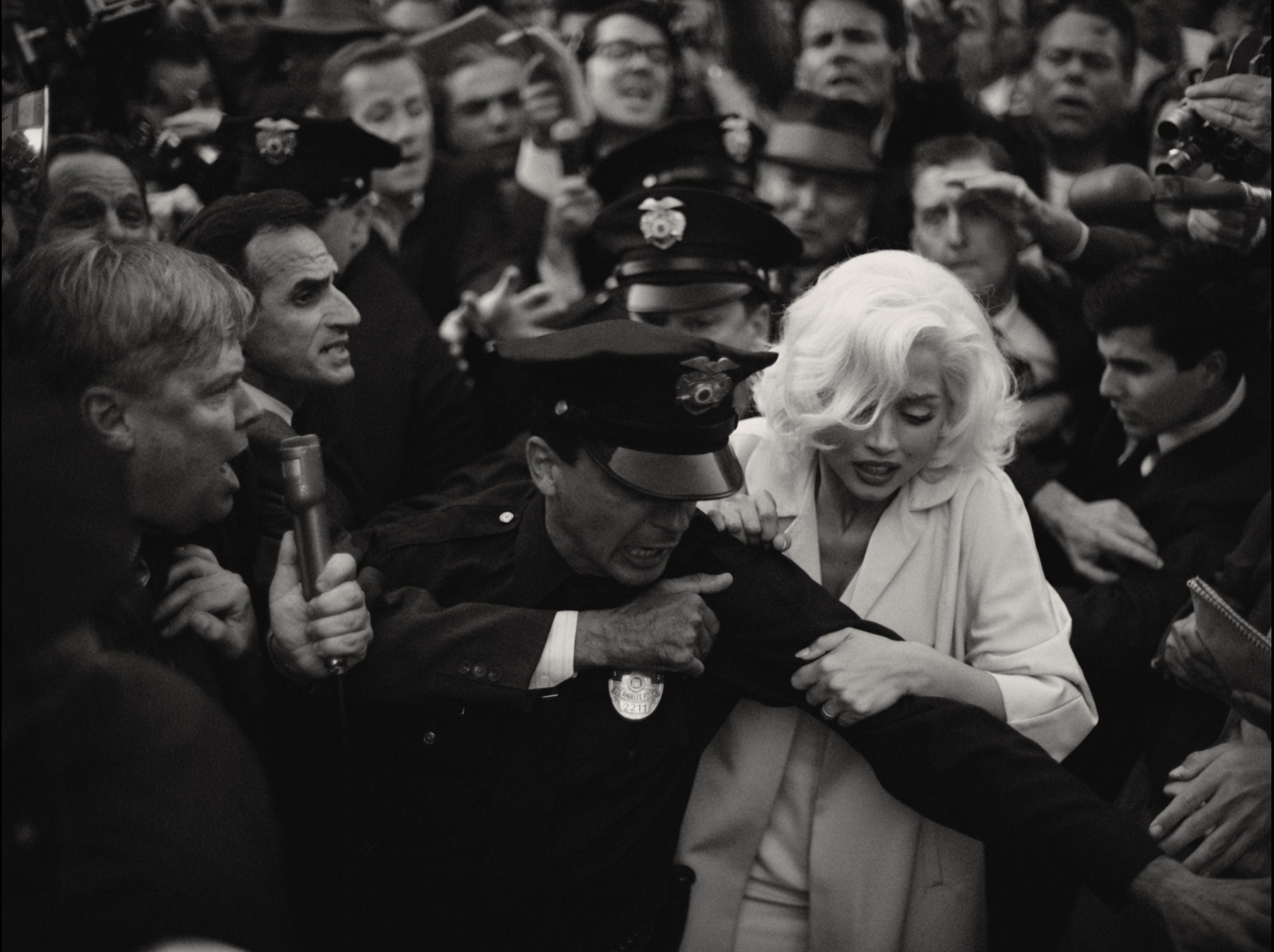
Call it curiosity killing the cat, but I was extremely curious to see what was in this film and what made it so divisive among those that did watch it. I’m not some sort of Monroe superfan, and know mostly the barest of basics about her life and career. With that being said, I went in knowing to be even more wary of the telling of the story given here as with most “biopics” (the Wikipedia entry logs Blonde as a “biographical film”… somehow) , as it is adapted from a fictional novel that advertises itself as such. The ethics of writing such a piece on a woman who’s known to have her image abused in life and death are a different conversation entirely, and one I will not be focusing on in this. Instead, I would like to discuss the Andrew Dominik’s portrayal of certain events in the plot.
A few more disclaimers before I dive fully in: I have not read the novel that this film is based on, and I never plan to. I do not know how exactly these events may have been treated differently from book to film, and so I will (hopefully) not give any judgement on the book in this writing. Again, different conversation to have and one that I feel is not mine to hold. Andrew Dominik is the one who adapted this story for the screen and directed it, so in my mind, he is the one at fault for the issues I find with this topic.
Early in the film, Monroe enters a relationship with Cass Chaplin and Eddy Robinson. During this, she becomes pregnant through Chaplin. She then chooses to get an abortion due to fear of the child inheriting her mother’s mental issues. As she is going to receive an abortion, she changes her mind and tells the driver of the car she is in she wants to return home; the driver does not hear her. Inside the center, she tells the doctors again that she no longer wishes to go through with the abortion, and they do not listen. The film then explicitly shows the abortion process, including a shot that lasts for about two seconds of the lips of Monroe’s vagina (which scarred me just a little bit). Through depicting this sequence as something Monroe vehemently disagreed to, it leaves a sort of terror relating to what she went through in this scenario. Despite this scene taking place very early in the course of Monroe’s pregnancy, the unborn child is depicted as a fully grown baby. This is just blatantly inaccurate and posts a strange image, especially given that it leads to an abortion. This could and has lend itself to pro-life portrayal of this plot point, with the Catholic World Report referring to the film as “unwittingly pro-life” in their review.
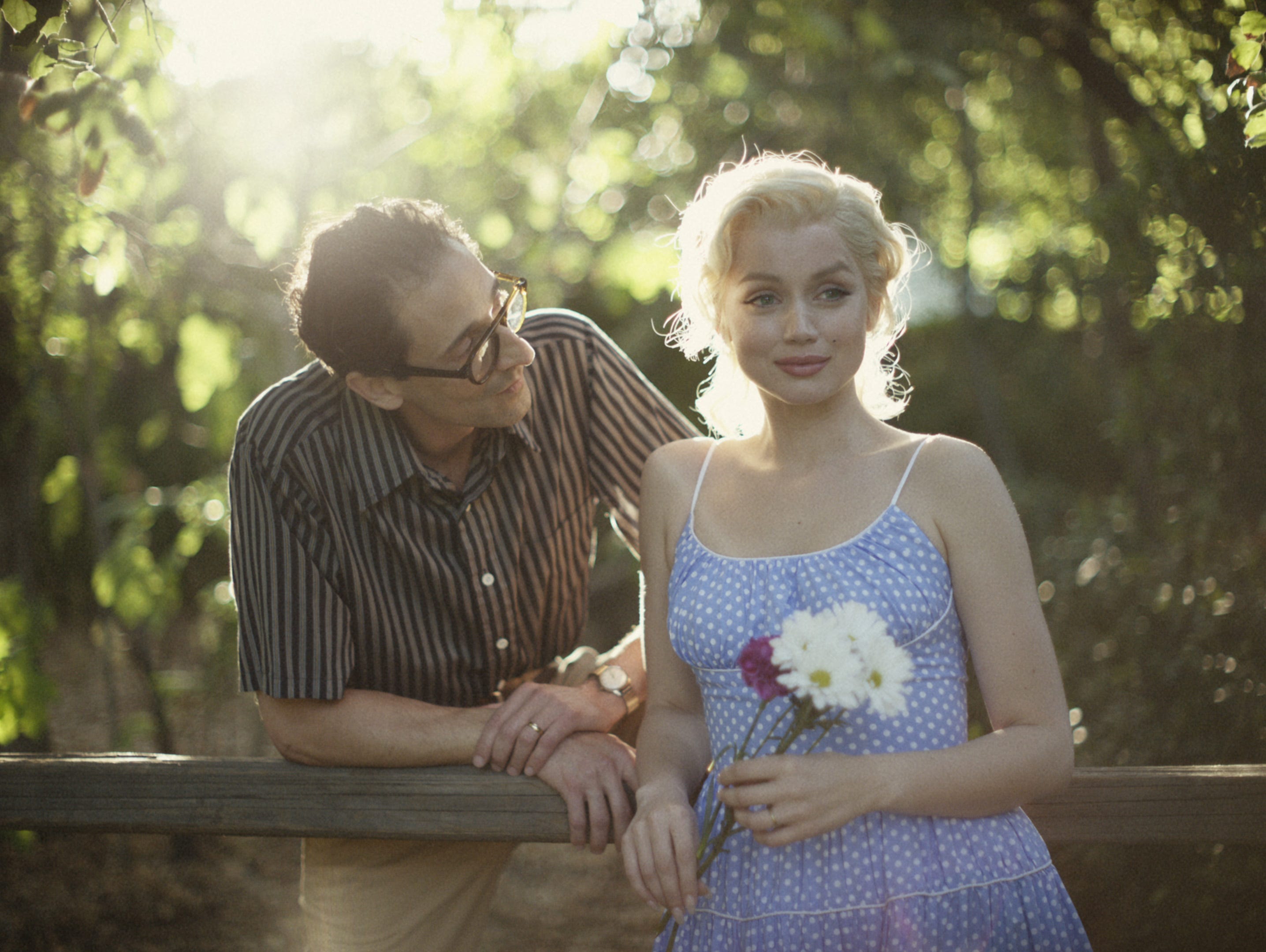
From this point on, the film goes back to the abortion and the impact it is perceived to leave on Monroe multiple times. The one that got the most attention are the numerous scenes in which Monroe sees or talks to the unborn children she carries. This also reflects on a child she nearly has with playwright Arthur Miller, which she has a conversation with where the child knows what happened to their unborn sibling. She later has a miscarriage due to a falling accident, further cementing a sort of curse on her to never have children, even though she very much wants them.
Here, let me mention that much of the film is shot to cause the viewer to gaze in horror at Monroe’s situation as it dwindles over the course of the film, ending on her death; some reviewers have referred to the presentation of the film as “Lynchian”. This gets reinforced and heightened as the film goes on; so that by the end, it was nearly all I was thinking about. One of the standout scenes to me in this manner was far closer to the end. Monroe was in the midst of her affair with John F. Kennedy, and invited to his offices. She is forced to give him a blowjob, and he proceeds to rape her directly after. After being forced out of the room he was in, she returns dazed to the hotel room she was staying in during the trip. She then hallucinates having another abortion. (Sort of a personal note, but I entirely believed this abortion scene was real while watching the film and went with that line of logic until I began to write this, where I looked up a plot summary to make sure that I was staying on course and realized that it wasn’t real. This made me even further confused as to the point of showing this at all.) This time, it is portrayed in what I feel can be best described as “fucked-up-funhouse” levels of terrifying, as Monroe is at her lowest and reliving a situation that has affected her greatly over the course of her life as depicted in the film.
With that being picked apart piece by piece, some general criticisms of the treatment of this topic in light of exactly how it is throughout the film must be made. Firstly, recall how this is all based on a fictional telling of Monroe’s life. It should be noted that no solid proof has ever been uncovered that proves Monroe received an abortion ever. This film gives widespread recognition of something that is nothing more than a rumor in reality, and could very well go on to lead to a larger group of people who believes this with no evidence to back it up. This was a giant red flag for me personally, as one of my research interests as of late has been the effect mass media can have on a viewer’s perception of things, and this could just warp perception to absolutely unbelievable levels. A more personally fueled note: Andrew Dominik is a man. I personally do not think he should have ever been the one at the helm of this story. I don’t think it should have been made at all, really, but at least have the basic decency to have a woman control the perception of this star that constantly has not had time give a fair look to her.
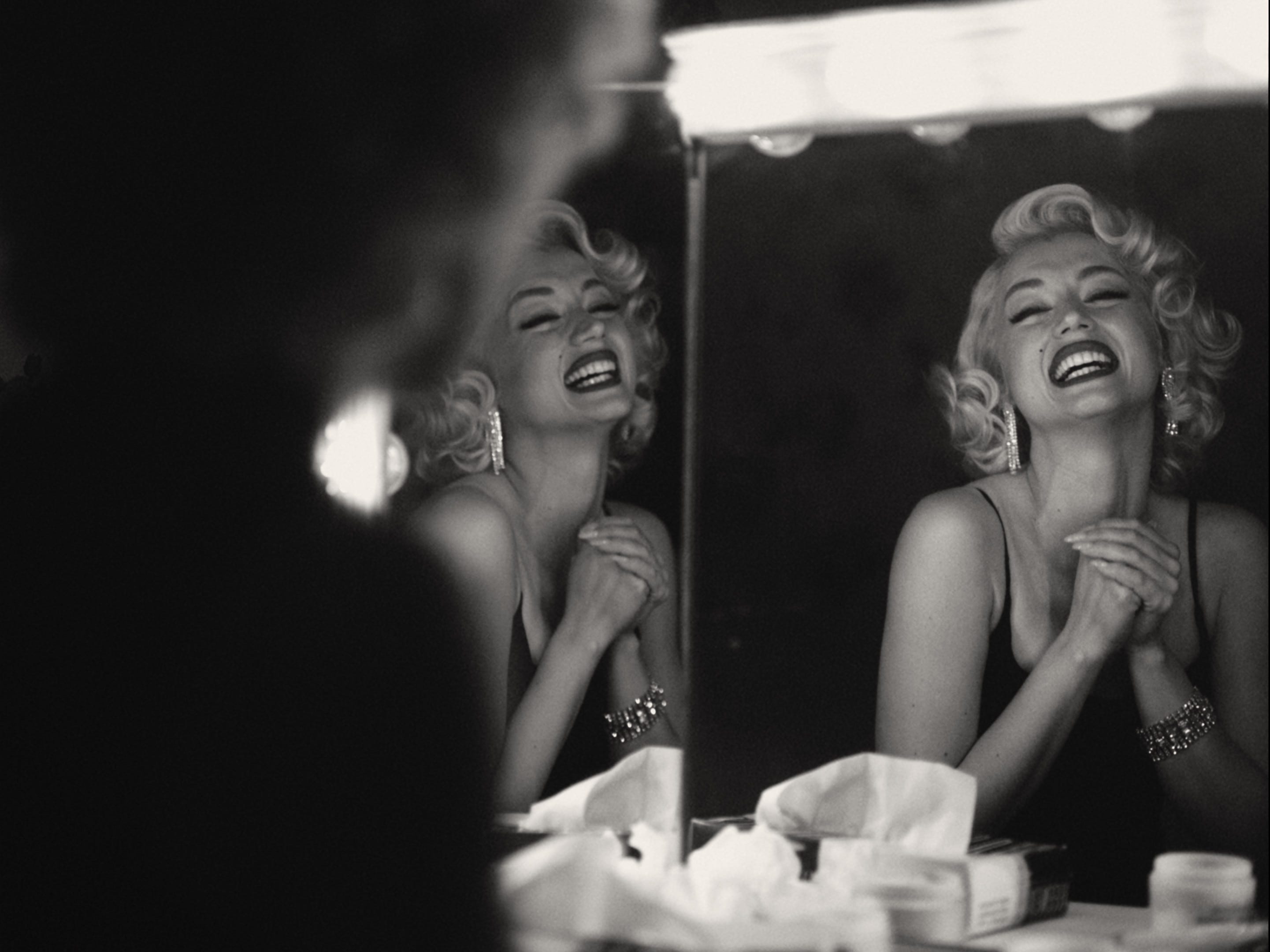
Apologies for this largely negative post, this movie just made me extremely angry throughout watching it and I really needed an outlet for it. Promise I will get back to my more impactful thoughts on films that I love in the next thing that I write. I’m also going to take this chance to promote my Letterboxd account, where I’ve also written on a number of films in a more general manner within their reviews function. I’ve even written a substantive review of Blonde, which touches on some of the issues I find with the film that I have discussed at length above and a few that I chose not to here.
And, lastly: Thank you so much for reading all this! I’ve had a lot of fun picking this up, and I’m extremely glad that people I don’t even know are reading it at this point. I didn’t really expect that to happen. See you again next week, hopefully!